Color Guide
How to Match Hair Extension Colour to Your Natural Hair
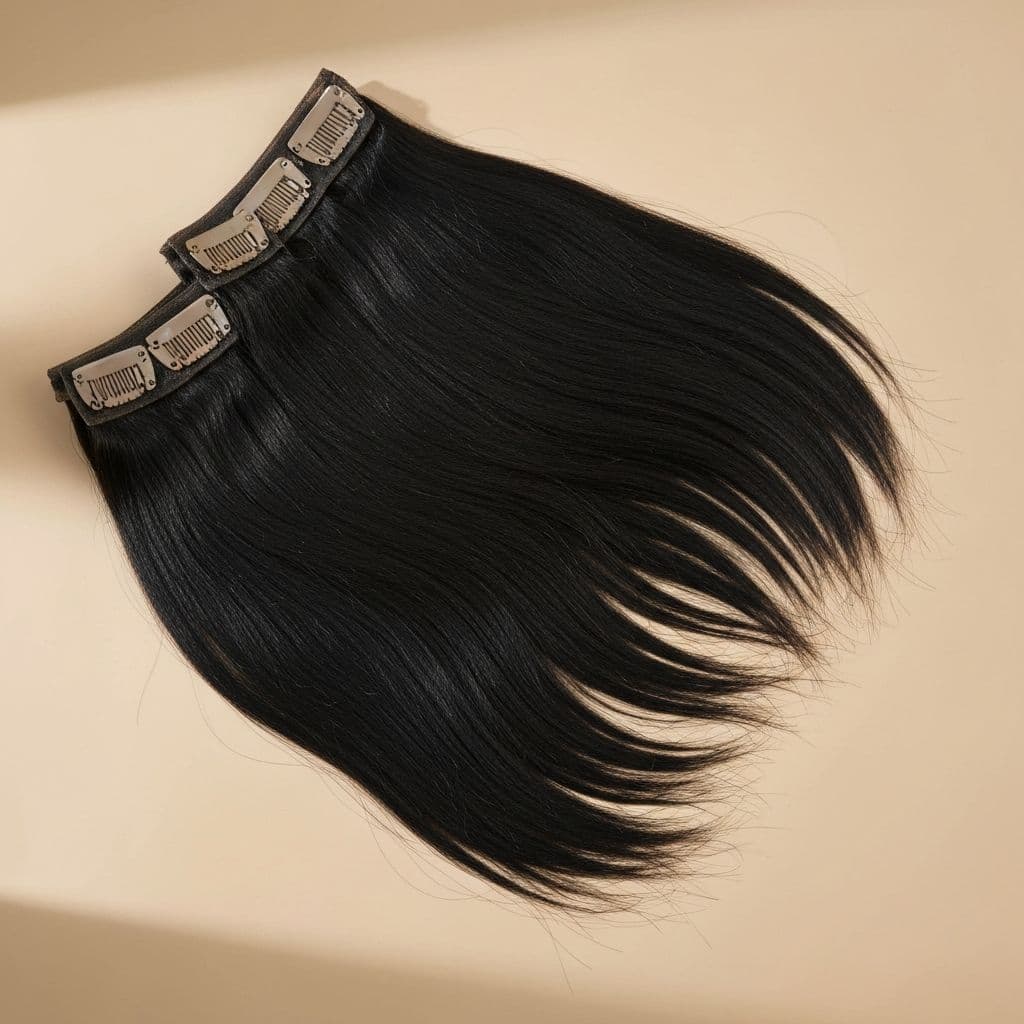
Struggling to find the perfect colour match for your extensions? Learn professional techniques for matching undertones, checking shades in different lighting, and avoiding common mistakes.
Why colour matching matters more than texture
Even the highest-quality human hair extensions look unnatural if the colour is off by just one shade. A near-perfect colour match creates seamless blending, while even a slight mismatch draws attention to the transition line.
Colour is the first thing people notice, often before texture or length. Investing time in accurate matching upfront saves you from expensive corrections, dye jobs, and the disappointment of extensions that sit unused.
Identify your natural hair undertone first
Every hair colour has an undertone: warm (golden, copper, red), cool (ash, blue, violet), or neutral (balanced between warm and cool). Check your undertone by looking at your hair in natural sunlight — warm tones glow golden, cool tones appear silvery or ashy.
A quick vein test on your wrist can also help. If your veins look greenish, you likely have warm undertones. If they appear bluish or purple, cool undertones are more likely. Neutral undertones show a mix of both.
Check your colour in multiple lighting conditions
Hair colour shifts dramatically between natural daylight, indoor warm bulbs, and cool office lighting. A shade that matches perfectly under salon lights may look completely wrong at home or outdoors.
Before ordering, photograph your natural hair in at least three lighting conditions: direct sunlight, indirect daylight, and indoor artificial light. Compare these photos against the extension colour options to reduce surprises after delivery.
Matching techniques for different hair products
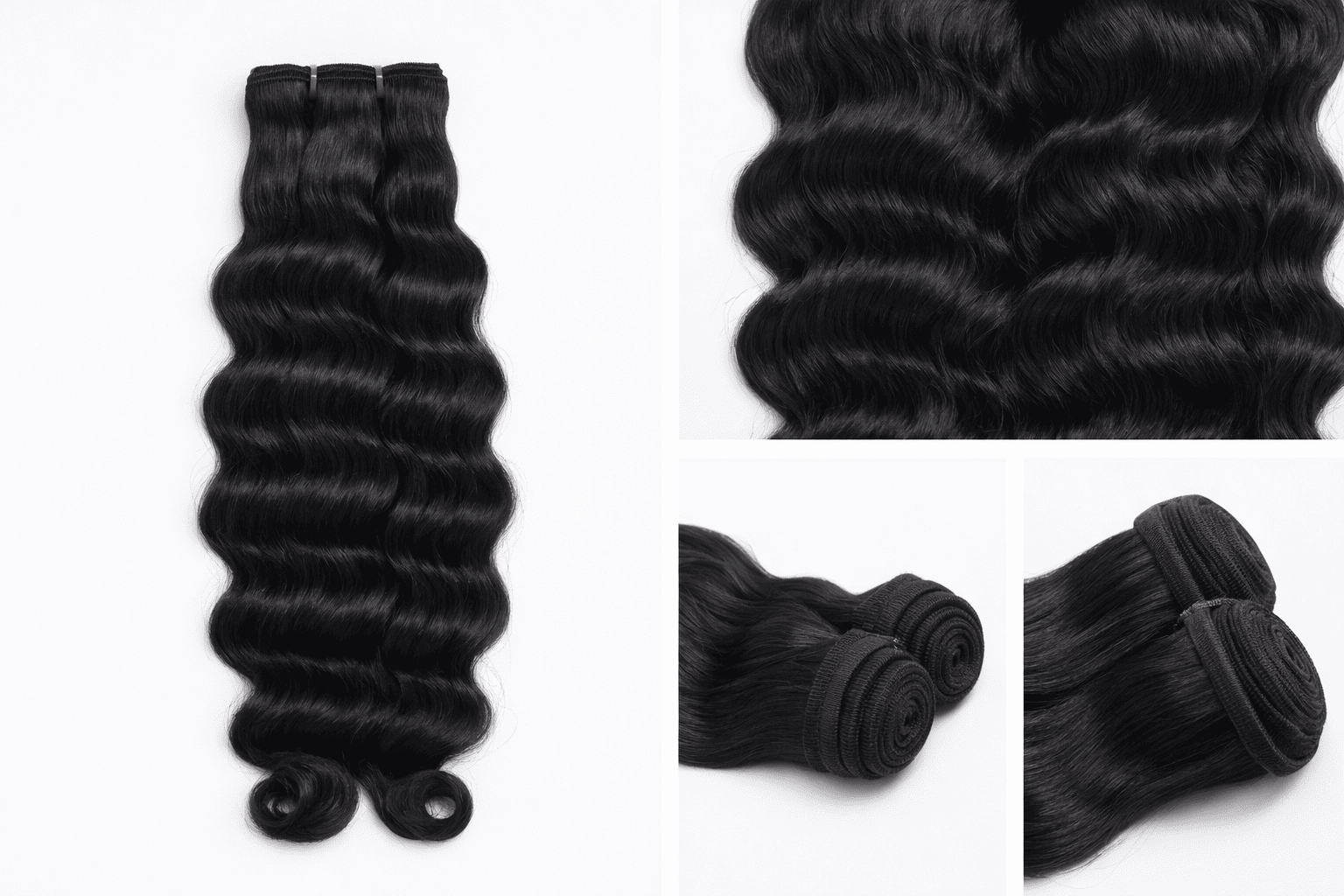
For weft and bulk hair, match the mid-lengths and ends of your natural hair rather than the roots. Most people have slightly darker roots, and matching the more visible lengths creates the most natural overall effect.
For lace front wigs and closures, match the hairline area precisely because this is where the lace meets your skin. A slight mismatch at the front hairline is more noticeable than anywhere else on the head.
Common colour matching mistakes to avoid
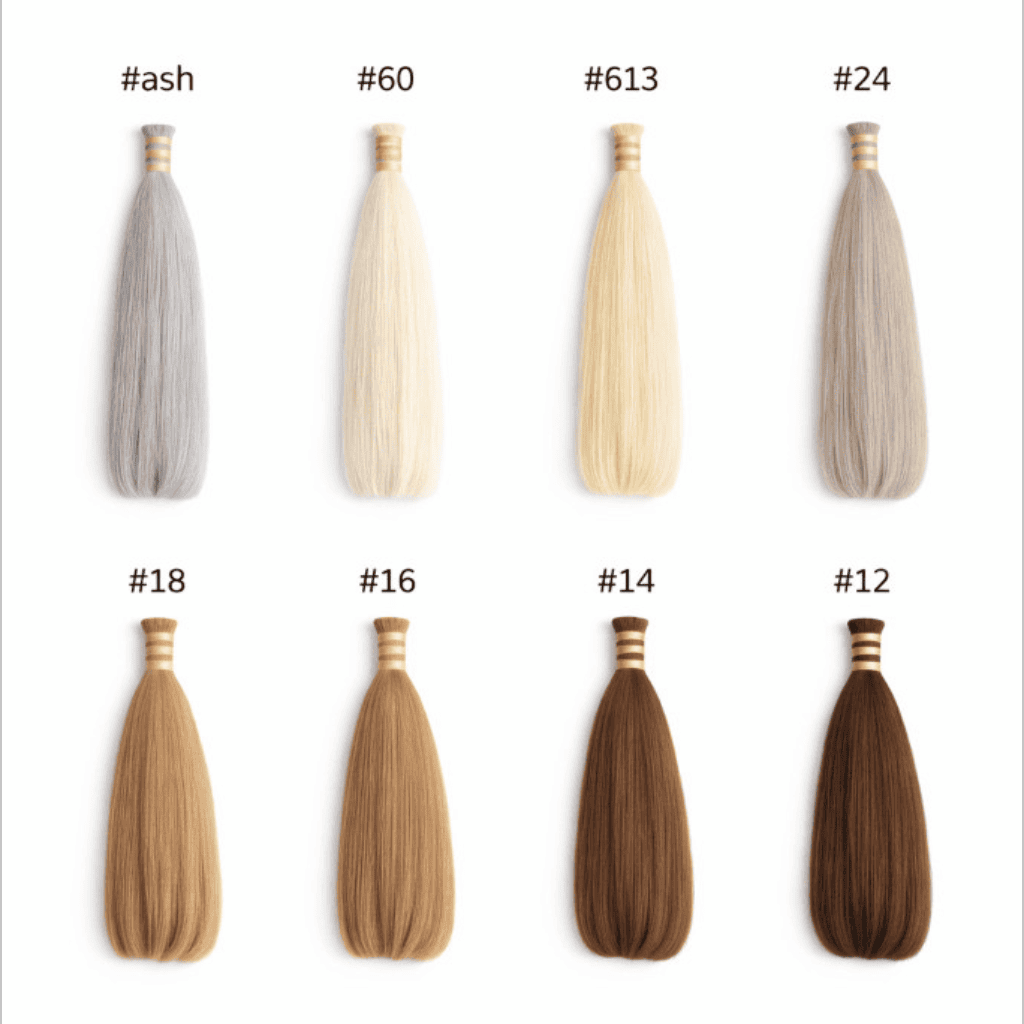
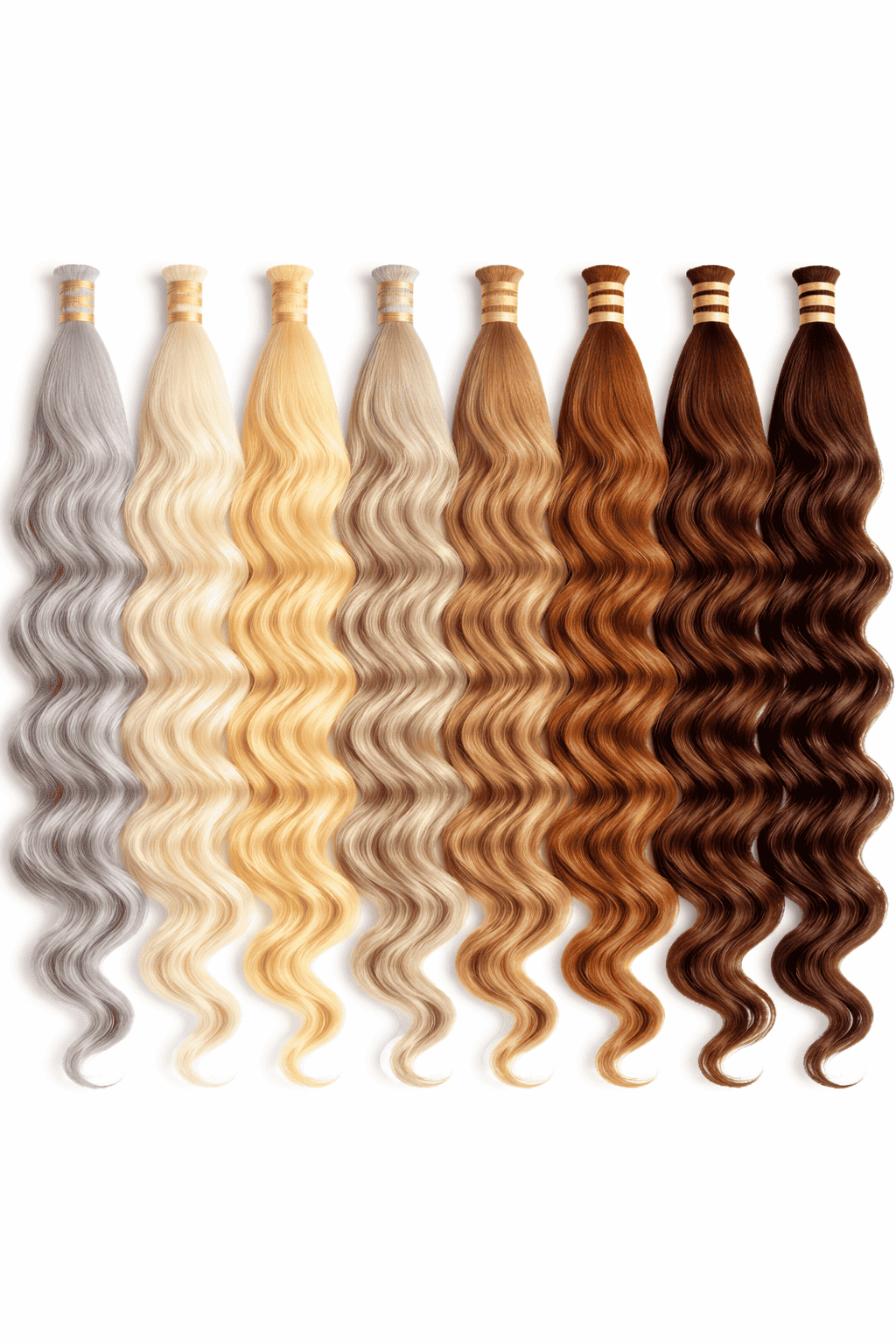
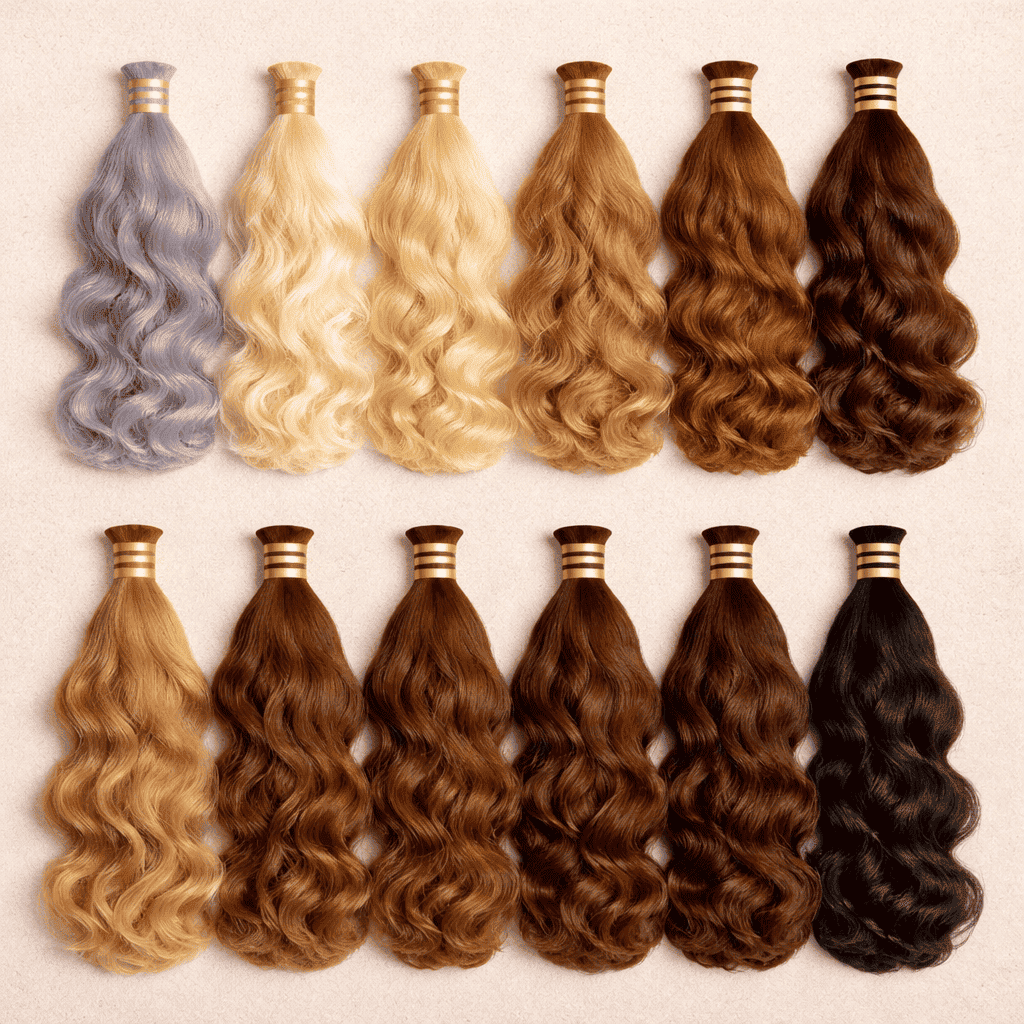
The most frequent mistake is matching based on online photos alone without checking a physical colour ring or swatch. Screen brightness, colour calibration, and product photography lighting all shift the perceived shade.
Another common error is ignoring seasonal colour changes. If your natural hair lightens in summer or darkens in winter, choose a shade that sits between your lightest and darkest tones for year-round wearability.
Using colour rings and swatches effectively
Professional colour rings display small samples of every shade in a collection. When using a colour ring, hold individual samples against your mid-lengths in natural light and take comparison photos for reference.
If you are between two shades, the general rule is to choose the slightly lighter option for highlights or the slightly darker one for lowlights and depth. Avoid extremes — one shade away from your natural colour is the safest zone.
Final checklist before ordering
Confirm four things before you order: your undertone category, the lighting conditions where you will wear the extensions most often, whether you are matching roots or lengths, and whether your colour changes seasonally.
When in doubt, ask the supplier for colour guidance with photos of your natural hair. A reputable human hair vendor will help you select the right shade and may offer exchange options if the match is not right.
Frequently Asked Questions
Can I dye human hair extensions to match my colour perfectly?
Yes, human hair extensions can be dyed darker, but lightening them with bleach is risky and may damage the hair. Professional colouring by an experienced stylist is strongly recommended for any chemical process.
What should I do if my extensions arrive and the colour is slightly off?
If the difference is subtle, a toner or colour-depositing conditioner can adjust the shade without damage. For significant mismatches, contact the supplier immediately and avoid altering the hair before discussing return or exchange options.
Is it better to match extensions to my roots or my ends?
For weft and bundle installations, match your mid-lengths and ends for the most natural blend. For wigs and closures, match your root area, especially at the hairline where the lace edge meets your skin.
How do I find my undertone if I have highlighted or coloured hair?
Look at the hair closest to your scalp where the colour is most natural, or check your eyebrow colour which usually reflects your natural undertone. You can also consult a professional colourist for a definitive reading.